

If you’re shopping for iced out moissanite jewelry, you’ve almost certainly seen the claim: “passes every diamond tester.” To cut straight to the answer: most standard thermal diamond testers will read moissanite as diamond, due to its similarly high thermal conductivity.

This is not a marketing gimmick unique to premium brands — it is a documented physical property of the stone, confirmed by gemological authorities including the Gemological Institute of America (GIA) and the International Gemological Institute (IGI) Gemological Institute Of America. But this fact is often overhyped by brands as a mark of premium quality — a common point of debate in hip hop jewelry communities, where many buyers worry about being called out for “fake” jewelry. The reality is, passing a basic tester does not make moissanite the same as diamond, nor does it guarantee a well-made piece. This guide breaks down how testers work, how noticeable moissanite is in real social settings, common scams to avoid, and what actually matters when picking a high-quality piece.
How Different Diamond Testers React to Moissanite

Not all diamond testers work the same way, and moissanite will pass some types and fail others. Most budget testers sold to consumers are thermal models, which moissanite will typically pass. Higher-end professional testers use electrical conductivity, which can reliably tell the two stones apart.
| Tester Type | How It Works | Moissanite Result | Accuracy for Distinguishing Moissanite From Diamond |
|---|---|---|---|
| Thermal Diamond Tester | Measures heat transfer through the stone | Almost always reads as “diamond” | ~5% — cannot reliably tell them apart |
| Electrical Conductivity Tester | Measures electrical current passed through the stone | Clearly reads as “moissanite / not diamond” | ~99% — fully accurate for stone identification |

Because moissanite transfers heat similarly to diamond, most entry-level thermal testers cannot distinguish between the two. This is an inherent physical property of the stone, not a special “upgrade” added by premium brands. Many lower-priced moissanite pieces will also pass a standard thermal tester, just like more expensive options.
For professional jewelers and appraisers, conductivity testers are the industry standard. These devices pick up on moissanite’s semiconducting properties, which natural diamond does not share. If someone is serious about verifying stone type, this is the tool they will use, and no moissanite stone will pass this type of test.
Another reliable visual clue is double refraction, one of moissanite's defining optical properties. Under a 10× jeweler's loupe, the facet junctions often appear slightly doubled because moissanite is a doubly refractive gemstone. Natural diamonds are singly refractive, so their facet edges remain crisp under magnification. While this isn't always easy to spot on very small stones, it's one of the most widely used visual identification methods without electronic testing.
On forums like Reddit, it’s a common misconception that “passes a diamond tester” means a piece is indistinguishable from diamond. In practice, most people who own a tester only have a basic thermal model, so the claim holds up for casual testing — but it is not a universal truth.
Can People Tell Moissanite From Diamond in Everyday Social Settings?
For most people in most everyday situations, moissanite is not visually distinguishable from diamond.

The difference only becomes apparent to experienced eyes under specific lighting conditions, and even then, it rarely reads as “obviously fake.”
Breaking it down by real-world scenario:
- Everyday casual wear (work, errands, public spaces): At normal social distances of three feet or more, virtually no one can tell the difference. Both stones shine brightly, and casual observers have no reference point to spot the gap in sparkle quality. For daily wear, concerns about being “called out” are largely unfounded for most people.
- Close conversation / bright indoor lighting: At arm’s length under strong overhead light, people who regularly wear or handle fine jewelry may notice moissanite has more colorful, vivid sparkle (higher dispersion) than diamond. This is not usually perceived as cheap — it just reads as a very bright, clear stone. Most casual acquaintances will not pick up on this difference.
- Clubs, parties and low-light venues: In dim, colored lighting, the visual gap all but disappears. Both stones reflect light strongly, and no one is close enough or in the right lighting to spot subtle differences. This is why moissanite is such a popular choice for event and nightlife jewelry.
- Around experienced hip hop jewelry collectors: People who handle iced out pieces regularly can usually tell moissanite from diamond by the fire and facet pattern, especially on large pendant stones. Among everyday collectors and value-conscious hip hop jewelry enthusiasts, moissanite is widely viewed as a practical alternative rather than a fake stone. At the same time, many high-end collectors and established artists still prefer natural diamonds, particularly for large statement pieces and investment value.
A common point of agreement across hip hop jewelry communities is that stone type is far less important than build quality. A well-made moissanite piece with clean setting and thick, even plating will always read as more premium than a poorly made diamond piece with shoddy craftsmanship. The idea that moissanite is “low tier” is mostly pushed by brands selling diamond jewelry at extreme markups, not by the culture itself.
The “Tester-Proof” Marketing Trap to Watch For
The “passes a diamond tester” claim is one of the most overused marketing tactics in budget moissanite jewelry, and it often leads buyers to overpay for low-quality pieces.

Many brands frame thermal tester compatibility as a premium feature, and charge 30–50% more for it. In reality, nearly all colorless moissanite — even low-grade, inexpensive stones — will pass a standard thermal tester. It is an inherent property of the material, not a sign of higher quality, better cut, or more durable construction.
This is a frequent topic of frustration on Reddit and jewelry forums, where new buyers often report paying a premium for a piece advertised as “tester-proof,” only to find it has thin plating, sloppy setting, and low-quality stone cutting. The tester claim becomes a distraction from the actual factors that determine how long the piece lasts and how good it looks.
Key takeaway: Passing a basic thermal tester simply reflects one of moissanite's natural physical properties. In practice, long-term appearance depends much more on stone quality, craftsmanship, and finishing than tester compatibility.
Common Scams: Fake “Tester-Proof” Stones on the Market
Not every piece advertised as “moissanite that passes a diamond tester” is actually solid moissanite. There are two common scams that target buyers who fixate on this single feature.
1. Coated cubic zirconia (CZ)
The most widespread scam is CZ stones with a thin diamond-like coating applied to the surface. This coating raises thermal conductivity just enough to pass a basic thermal tester, mimicking moissanite. The coating wears off after a few months of regular wear, at which point the stone will no longer pass a tester and will look dull and hazy.
- How to spot it: Prices that seem too good to be true (under $50 for a full moissanite pendant), vague product descriptions that avoid the phrase “solid moissanite,” and no mention of a GRA or equivalent certificate.

2. Low-grade moissanite with inflated quality claims
Some sellers use low-quality, cloudy, or off-color moissanite, but market it as premium VVS-grade solely because it passes a tester. The stone is technically moissanite, but it has poor clarity, visible inclusions, or a yellow tint that makes it look cheap up close.
- How to spot it: No close-up photos of the stone surface, no clarity grading information, and marketing copy that leads with the tester claim instead of stone quality or craftsmanship.
To avoid these scams, prioritize listings that share clear close-up imagery, specify stone grade and certification, and detail base metal and plating thickness. A legitimate moissanite piece will lead with its quality, not just its ability to pass an entry-level tester.
For a full breakdown of what to look for, read our guide on how to spot quality iced out jewelry.
What to Prioritize Instead of “Tester-Proof” Claims
If you want a moissanite piece that looks premium and holds up over time, focus on these four factors instead of whether it passes a basic diamond tester.
1. Stone cut and clarity
Well-cut moissanite has crisp, even facets and consistent sparkle across the whole stone. Cloudy, poorly cut stones will look cheap up close, even if they pass every thermal tester on the market. For fully iced out pieces, look for stones with uniform sizing and even, consistent setting.
2. Base metal and plating quality
The plating is what makes a piece look expensive or cheap long-term. Thin gold plating will wear off in months, exposing copper base metal and turning skin green — a much more noticeable “low quality” sign than the stone type. Look for pieces with thick vacuum plating or at least 1–2 microns of gold plating for daily wear.
3. Setting craftsmanship
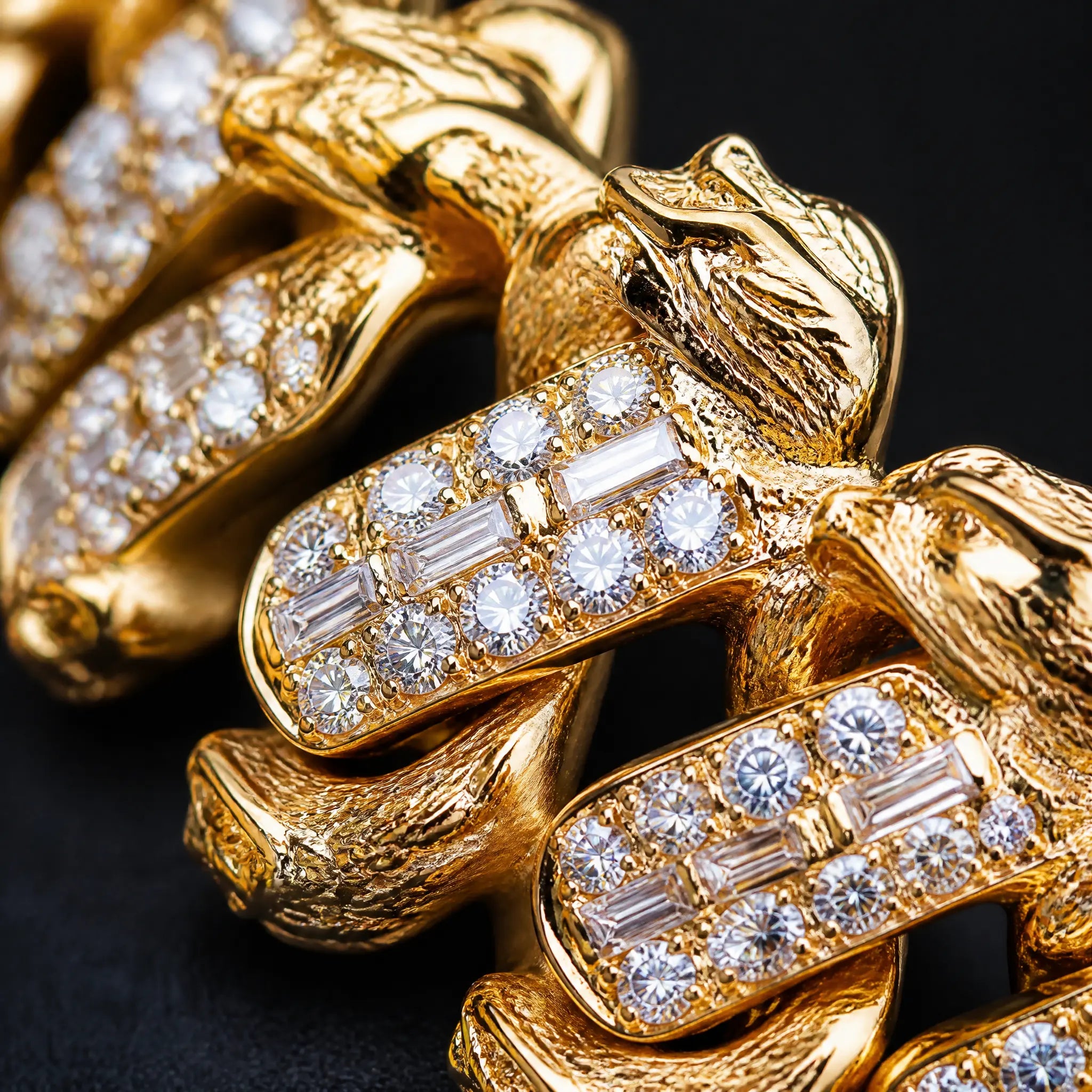
Loose stones, uneven spacing, and visible glue are instant signs of a cheap piece, regardless of stone type. Well-made micro-pavé setting has stones sitting flush and evenly, with no rough edges or visible adhesive. This is the detail that most separates premium iced out jewelry from budget costume pieces.

4. Clear warranty and return policy
Reputable brands stand behind their products. If a brand only advertises “tester-proof” stones but says nothing about plating warranty or stone replacement, it’s usually a sign they cut corners on build quality.
Before buying any iced out jewelry, it's worth running through a simple quality checklist:
- Look for consistent stone color and uniform cutting.
- Check whether the stones are securely set with clean prongs rather than glue.
- Ask about the plating method, such as vacuum plating or thick gold plating designed for daily wear.
- Verify whether the stones come with documentation such as a GRA certificate when applicable.
- Review the warranty and return policy before purchasing.
Can You Tell Moissanite From Diamond Without a Tester?
Yes—although it becomes much easier with a 10× jeweler's loupe. Besides using an electrical conductivity tester, experienced jewelers often rely on optical characteristics such as double refraction, stronger rainbow fire, and the way facet junctions appear under magnification. None of these signs should be used alone, but together they can provide useful clues before professional testing.
Frequently Asked Questions
Will a cheap diamond tester detect moissanite?
Most budget consumer diamond testers are thermal models, and they will typically read moissanite as diamond. These testers cannot reliably distinguish between the two stones. Only higher-end electrical conductivity testers can accurately identify moissanite.
Is it a lie when brands say moissanite passes a diamond tester?
It is technically true for standard thermal testers, but it is often a misleading marketing claim. The ability to pass a basic tester is an inherent property of almost all moissanite, not a premium feature, and it does not indicate higher stone quality or better craftsmanship.
Can jewelers tell moissanite from diamond?
Most professional jewelers can tell the difference, either with a conductivity tester or by visual inspection under magnification. Casual jewelry store staff with only a basic thermal tester may not be able to distinguish them.
Does moissanite look fake to other people?
For most people in most everyday situations, moissanite does not look fake. It is a clear, highly sparkling stone that reads as a fine gemstone. Only people with extensive experience with diamonds and moissanite are likely to spot the difference, and even then, it is usually not perceived as “fake” — just a different stone.
Why do people care if moissanite passes a diamond tester?
Many buyers worry about being judged for wearing non-diamond jewelry, and see tester compatibility as a way to avoid being “called out.” In practice, however, the quality of the jewelry’s construction is far more noticeable to other people than the type of stone.
Can you tell moissanite from diamond with a loupe?
Yes. Under a 10× jeweler's loupe, moissanite may show double refraction, causing some facet edges to appear doubled. Diamonds do not display this effect because they are singly refractive.
Why does moissanite sparkle more than diamond?
Moissanite has a higher dispersion value (0.104) than diamond (0.044), meaning it produces stronger rainbow flashes. Some buyers enjoy this look, while others prefer the more subtle brilliance of natural diamond.
Final Takeaway
Moissanite will pass most standard thermal diamond testers, but this fact says very little about the quality or value of a piece of iced out jewelry. It is a physical property of the stone, not a mark of premium craftsmanship, and it is often overhyped by brands to justify higher prices.
If your biggest concern is looking polished and avoiding cheap-looking jewelry, focus on stone cut, plating quality, and setting craftsmanship — not tester compatibility. For many buyers, especially those focused on everyday wear and value, a well-made moissanite piece can offer an appealing balance of appearance, durability, and cost. Ultimately, the overall craftsmanship of the jewelry often has a greater impact on how the piece is perceived than the gemstone alone.




Moissanite vs Cubic Zirconia (CZ): What’s the Real Difference for Hip Hop Jewelry?
Why Do Cheap Hip Hop Chains Turn Green? How to Avoid Skin Discoloration