
In the world of iced out hip hop jewelry, the moissanite vs cubic zirconia hip hop jewelry debate boils down to three core differences: long-term durability, visual depth, and overall value. Moissanite ranks higher in hardness, delivers more vivid fire, and retains its like-new sparkle for years of daily wear, making it the standard for mid-range everyday pieces. Cubic zirconia (CZ) comes at a much lower cost and offers strong initial sparkle, but scratches and dulls relatively quickly with regular use, making it best suited for occasional statement pieces. For pieces you’ll wear multiple times a week, moissanite typically delivers better long-term value; for items reserved for parties or events, CZ can be a practical, budget-friendly choice.

Core Material Comparison: At a Glance
These physical properties directly impact how the stones look, how long they last, and how they hold up to daily hip hop wear. This side-by-side breakdown covers the most meaningful differences for everyday use.
| Property | Moissanite | Cubic Zirconia (CZ) | Real-World Impact for Hip Hop Jewelry |
|---|---|---|---|
| Mohs Hardness | 9.25 | 8.0–8.5 | Higher hardness reduces surface scratches and slows dulling over years of daily wear |
| Refractive Index | 2.65 | 2.15–2.18 | Shapes how light passes through the stone and how bright it appears in low light |
| Dispersion (Fire) | 0.104 | 0.060 | Creates rainbow sparkle; moissanite produces more vivid color flashes under direct light |
| Thermal Conductivity | High | Low | Determines reaction to standard thermal diamond testers |
| Chemical Stability | Excellent | Moderate | Resists damage from sweat, cologne, perfume, and daily skincare products |
| Typical Daily Wear Lifespan | 5+ years with minimal dulling | 6–12 months before noticeable hazing | Reflects how long the stone retains its original crisp sparkle |
Daily Wear Durability: How Long Each Stone Lasts
With regular daily wear, moissanite typically maintains its original finish 3–5 times longer than CZ. This is the single most impactful difference for anyone shopping for a go-to pendant or cuban link chain.
Based on shared user experiences in hip hop jewelry communities, CZ stones show visible wear relatively quickly with daily use. Small surface scratches accumulate over 6–12 months, creating a hazy, dull appearance that loses the crisp, bright sparkle the piece had when new. Sweat, body oils, and common products like cologne can accelerate this process, as CZ has lower chemical resistance. The effect is most noticeable on high-contact areas, such as the edges of baguette cuts or the surface of large pendant stones.
Moissanite’s 9.25 Mohs hardness gives it far better scratch resistance against everyday contact with clothing, phone screens, and other common surfaces. Many wearers report their moissanite iced out pieces still look nearly new after 2–3 years of regular use, requiring only basic cleaning to restore full sparkle.
For occasional wear — a few times a month for events or nights out — both stones will hold up well, and the durability gap may not be noticeable for years.

Price Gap Breakdown: Why Moissanite Costs 2–3x More
It is common to see two nearly identical iced pendants where the moissanite version costs two to three times as much as the CZ version. This gap is rooted in real material and production differences, not just branding.
First, raw moissanite has a significantly higher per-carat cost. High-quality colorless moissanite requires more precise manufacturing and quality control, particularly for clarity-graded stones marketed as VVS quality. CZ can be mass-produced at a much lower cost, which is why it is the standard stone for budget hip hop jewelry.
Second, moissanite is harder and more brittle to cut and set. Micro-setting small moissanite stones into a pendant or chain requires more labor and has a higher breakage rate during production, which adds to the final cost. CZ is softer and easier to work with, keeping assembly costs lower.
Third, premium moissanite pieces almost always pair the stones with better base metal and plating quality. It is rare to find a high-grade moissanite piece on a thin, low-quality copper base; most mid-range moissanite jewelry uses thicker plating and more durable construction, which also contributes to the higher price.
This does not mean every expensive moissanite piece is automatically a good value, or that CZ is always a poor choice. For well-made pieces from reputable brands, however, the price gap generally reflects real differences in materials, craftsmanship, and expected lifespan.
Visual Quality & Social Recognition: When CZ Reads as Low-End
From a distance, both stones can look similarly bright. Up close in bright light, the difference in sparkle quality becomes more apparent, and can read as cheap to people familiar with hip hop jewelry.
CZ delivers a bright, flashy sparkle that can look impressive from far away or in dim lighting. Up close, the sparkle often comes across as flat and uniform — what many in the community describe as a “costume jewelry” look. Under natural sunlight or bright indoor light, CZ produces fewer rainbow flashes and more white glare, which is one of the clearest visual tells of a lower-priced piece.
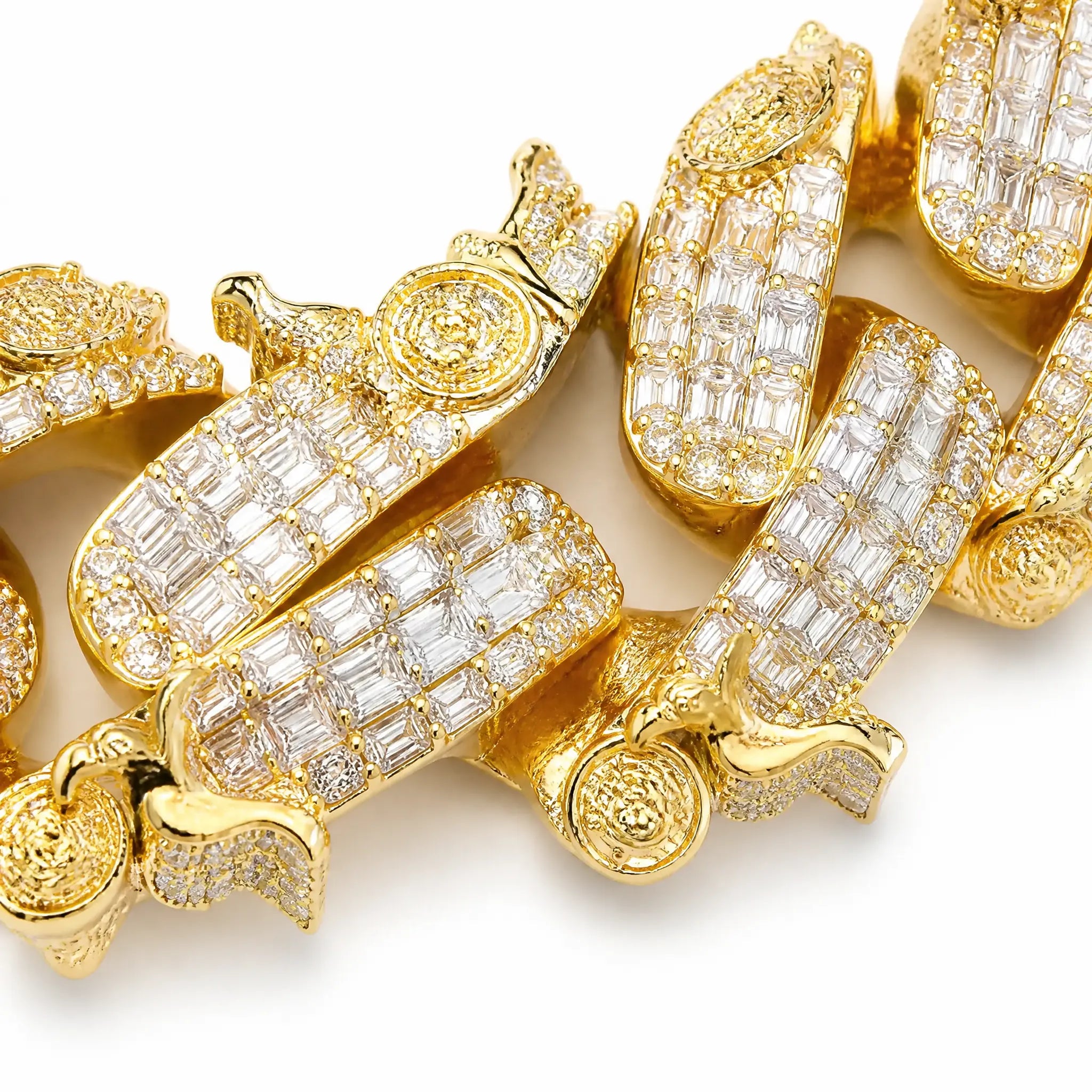
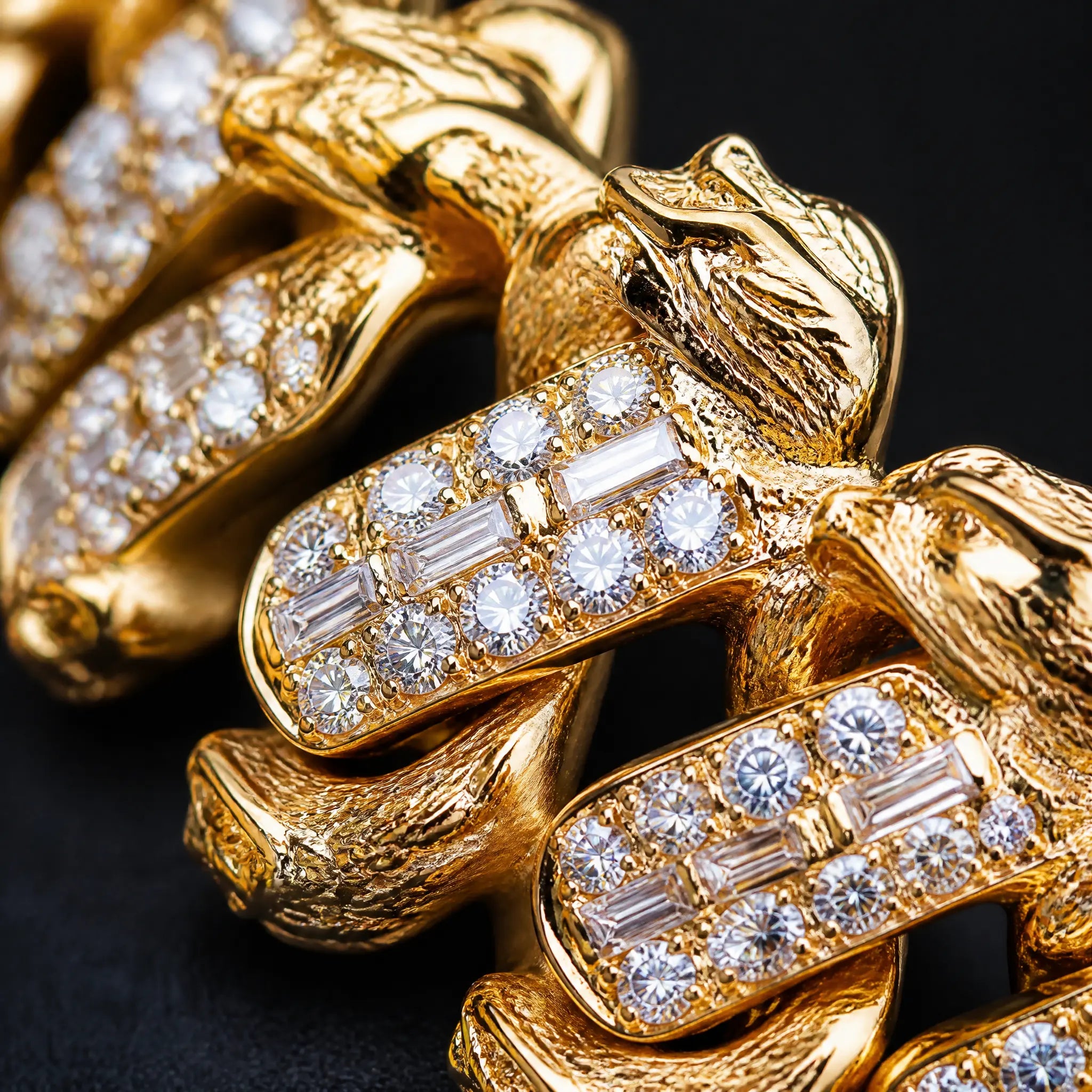
Moissanite’s higher dispersion creates more vivid, colorful fire as light hits the stone. The sparkle has more depth and variation, and reads as more similar to a natural diamond in most lighting conditions. For small, closely set stones on a fully iced cuban link, the difference can be subtle from a distance; for large center stones on pendants, the gap in visual quality is much easier to see at conversational distance.
CZ pieces are most likely to read as cheap in three scenarios:
- Up close in bright light: The flat sparkle and hazy surface of worn CZ is noticeable at conversational distance, especially to people who own nicer jewelry.
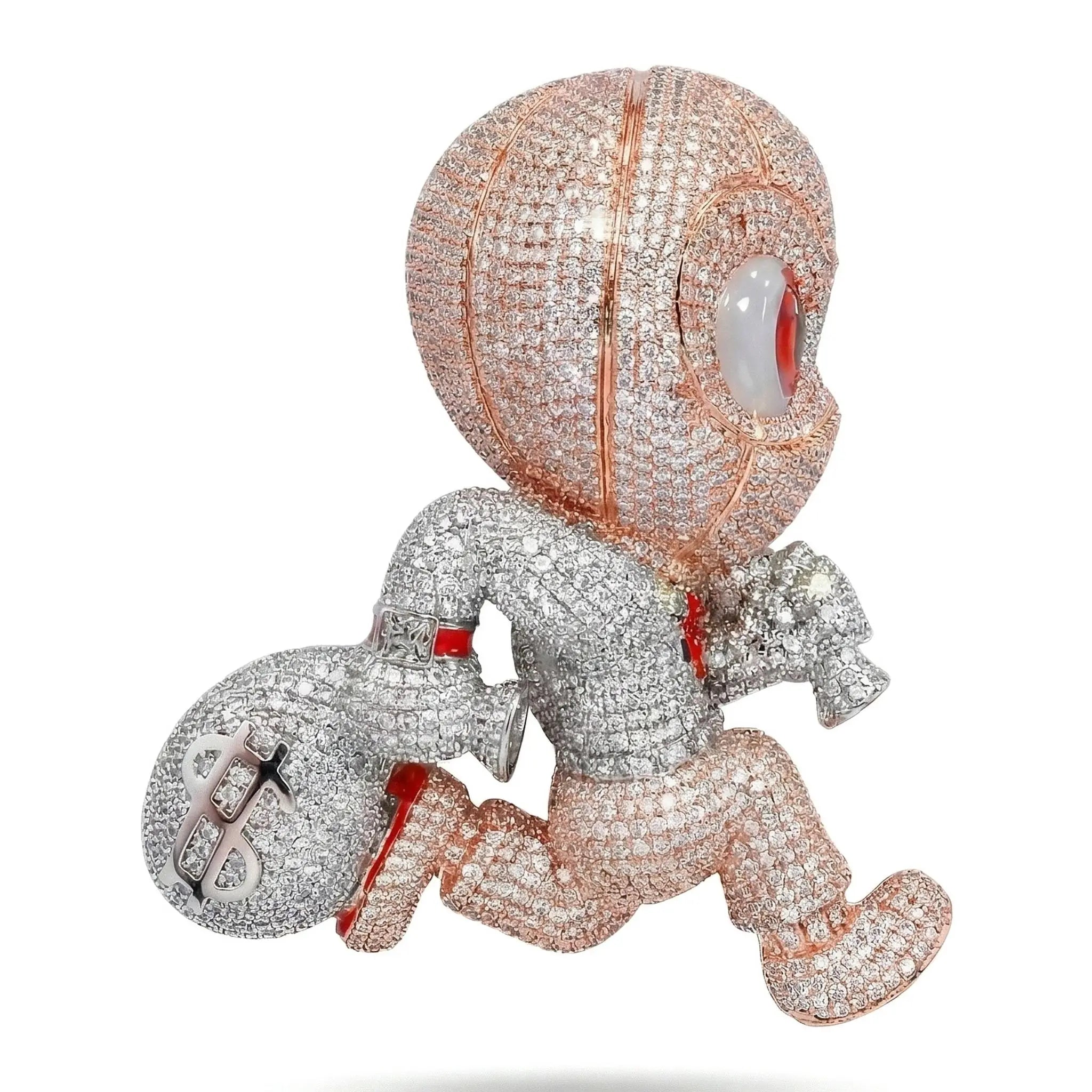
- Large statement pendants: Big center stones show quality differences much more clearly than small, densely set stones on a chain.
- Daily-wear pieces: After several months of regular use, the hazing and scratching on CZ becomes obvious even to casual observers.
It is worth noting that the biggest “low quality” signal is almost never the stone type itself — it is cheap plating, sloppy stone setting, and flimsy construction. A well-crafted CZ piece will always look better than a poorly made moissanite piece.

3 Ways to Tell Moissanite and CZ Apart (No Tools Needed)
You do not need a diamond tester to distinguish between the two stones. These three methods are widely used by experienced buyers to identify stone type from photos or in person.
- Double shadow test: Look through the top of the stone at text or a straight edge underneath. Moissanite has high birefringence, so you will see a doubled shadow of the edges or text. CZ shows only a single, sharp shadow. This works best with larger, clear stones.
- Sparkle rotation test: Turn the stone under a bright light. Moissanite will flash distinct, bright rainbow colors as it moves. CZ will mostly reflect white light, with very little color variation.
- Edge clarity check: Examine the edges and facets of the stone closely. CZ will often look slightly soft or rounded along the edges, especially on lower-priced pieces. Moissanite holds a sharper, more defined cut because it is harder.
Budget Buying Guide: What to Choose at Every Price Point
There is no universal best option — the right stone depends on how often you will wear the piece and your budget. Here is a general framework for most hip hop jewelry buyers.
- Under $50: Stick to well-made CZ pieces. At this price point, any listing advertised as moissanite is almost certainly mislabeled CZ. Prioritize thick plating and solid construction for occasional wear.
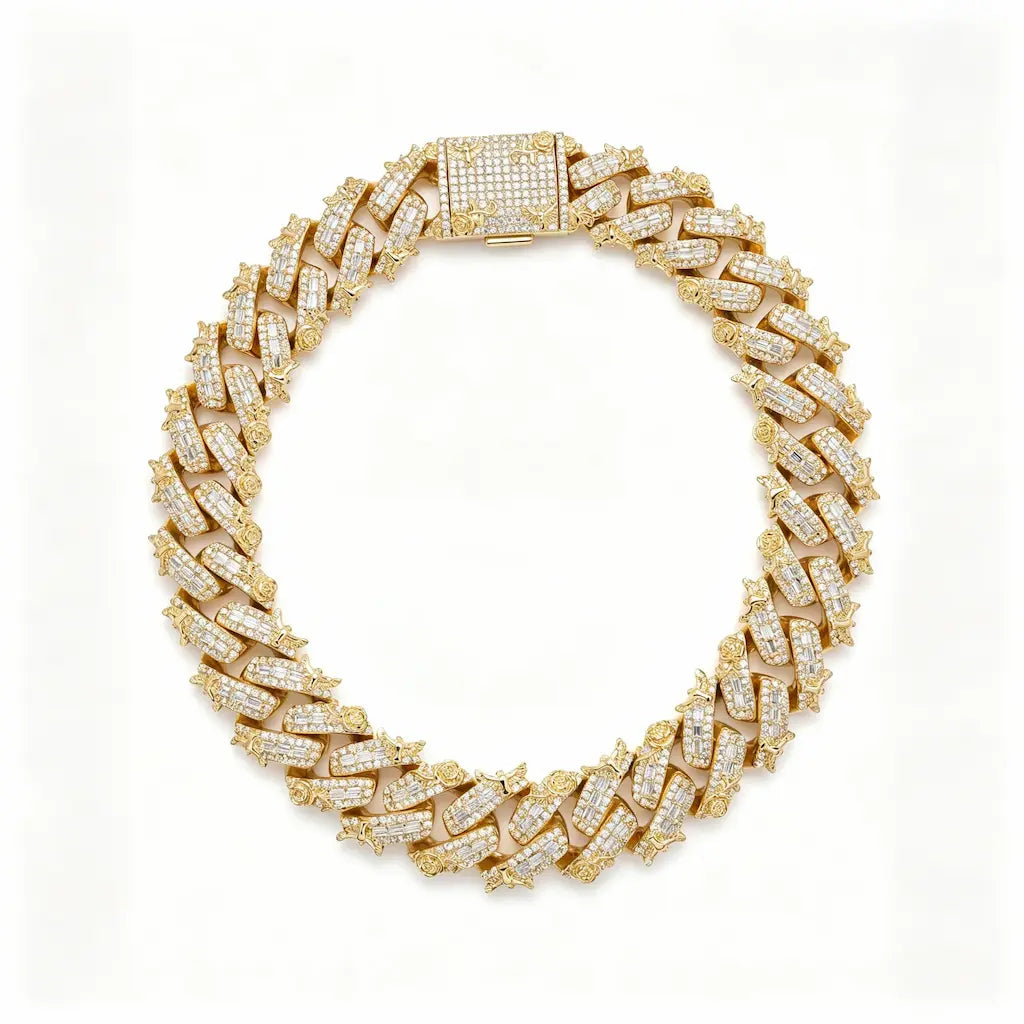
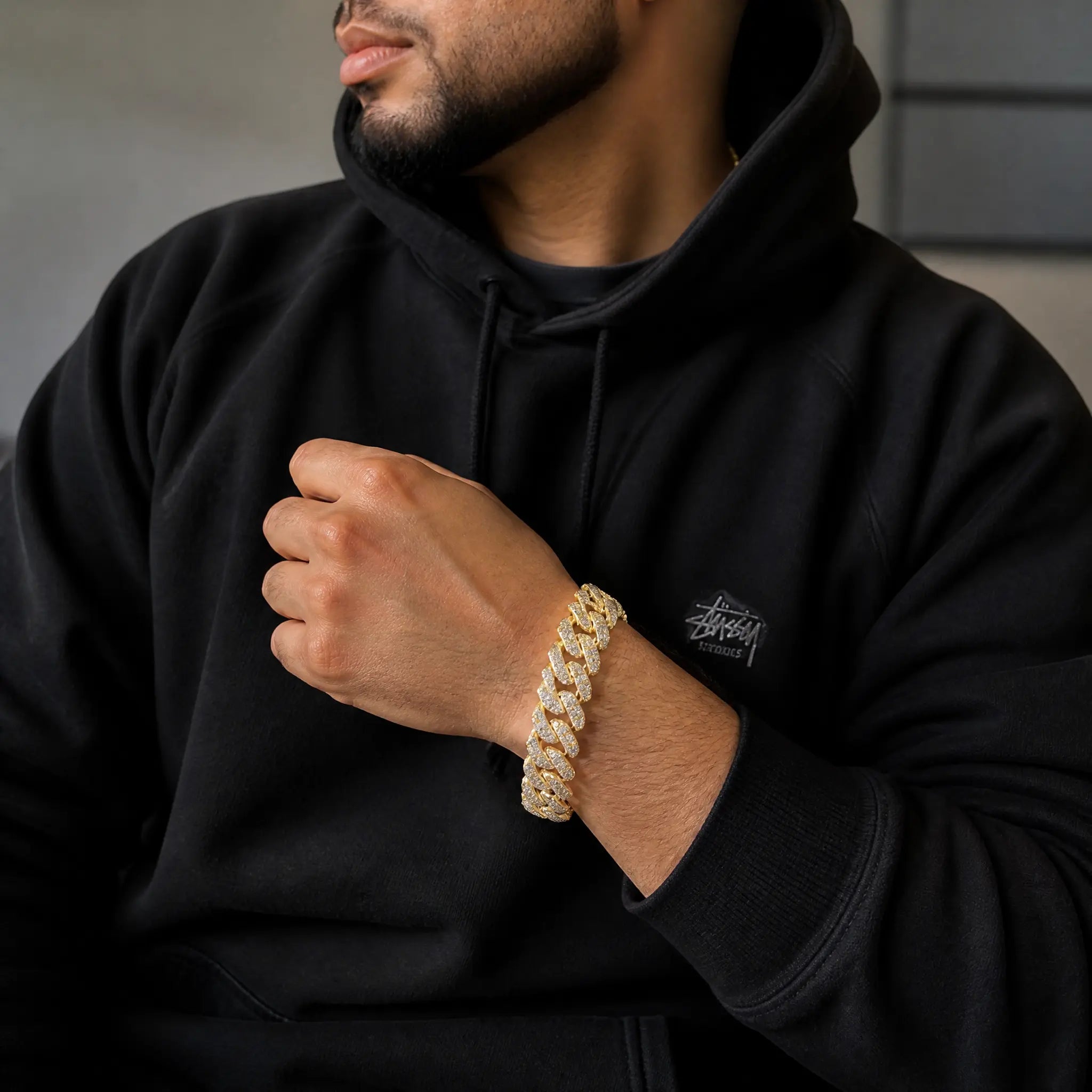
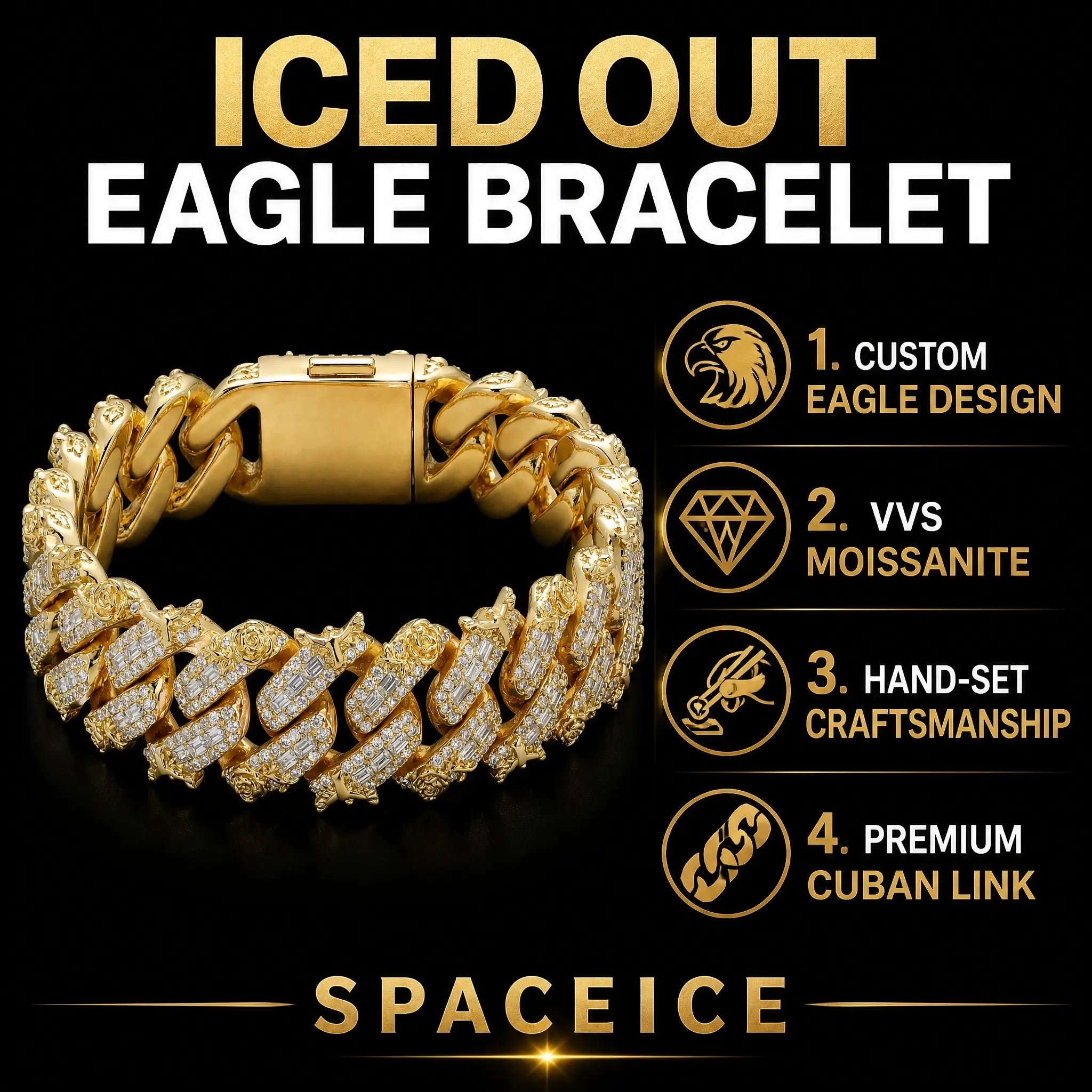
- $100 range: This is the entry point for solid, everyday moissanite pendants and smaller chains. You can find well-set pieces with real moissanite that will hold up to regular wear. The Spaceice Jewelry moissanite collection, for example, falls largely in this range, with a focus on durable plating and clean stone setting for daily use.
- $300 and up: Expect premium graded moissanite, thicker gold plating, and more intricate designs like fully iced cuban link chains. Pieces at this tier are built to serve as long-term staples in a jewelry collection.
If you are unsure which is right for you, starting with a smaller, lower-priced moissanite piece can help you get a feel for the look and feel before investing in a more expensive statement item.
Frequently Asked Questions
Can you tell the difference between moissanite and cubic zirconia in hip hop jewelry?
From a distance, most people cannot. Up close in bright light, the difference in sparkle depth and edge clarity is noticeable to many people, especially those familiar with fine or hip hop jewelry. Worn CZ that has developed scratches and hazing is much easier to spot than new, well-made CZ.
Is moissanite worth the extra cost over CZ?
It is worth the extra cost if you plan to wear the piece regularly. For daily-wear items like a go-to cuban chain or everyday pendant, the longer lifespan and better long-term appearance of moissanite usually delivers better value over time. For occasional-wear statement pieces, CZ can be a smarter financial choice.
How long does cubic zirconia last with everyday wear?
With daily wear, most CZ stones will start to show visible scratching and hazing after 6–12 months. The exact timeline depends on the stone size, the quality of the setting, and how well you care for the piece. Occasional wear can extend the lifespan to several years.
Does CZ pass a diamond tester like moissanite?
No. Standard thermal diamond testers react to moissanite because it has high thermal conductivity, but they will not react to CZ. CZ will always register as a non-diamond stone on a standard tester.
Is it tacky to wear CZ hip hop jewelry?
Not inherently. CZ jewelry can look great when it is well-made and worn appropriately. The “tacky” reputation usually comes from cheaply made pieces with bad plating, sloppy setting, and overly exaggerated designs, not from the CZ stone itself.
Final Thoughts
The moissanite vs cubic zirconia hip hop jewelry choice ultimately comes down to wear frequency, budget, and priority for long-term quality. CZ is a solid, affordable option for occasional statement pieces, while moissanite is the better pick for daily wear and a more premium, long-lasting finish.
Neither stone is inherently better for every buyer, but understanding the real differences in durability, sparkle, and cost can help you avoid overpaying, picking a piece that wears out quickly, or ending up with a design that doesn’t fit the vibe you’re going for. For more guidance on picking quality pieces, check out our guide on how to spot well-made iced out jewelry.
If you’re shopping for durable, everyday moissanite hip hop pieces, you can explore Spaceice’s curated selection of pendants and cuban chains built for regular wear.


Does Moissanite Pass a Diamond Tester? The Honest Truth for Iced Out Jewelry